
- Energy Testing
- Insulation
- Windows
- Radon Mitigation
- Energy Solutions
- Attic Air Sealing
- Attic Insulation
- Attic Ventilation
- Rim Joists: Insulation and Air Sealing
- Rooms above garages
- Sidewalls (Open & Closed Cavities)
- Sloped & Vaulted Ceilings
- Bathroom Exhaust Fans
- Basement Walls
- Story-and-a-half Homes: Cape Cod, Salt Box, Modified A-Frame, Bungalow
- Crawlspace Moisture Control & Insulation
- Insulation Cantilevered floors
- Ice Dams
- Rebates & Incentives
In many “pre-war” homes, exterior sidewalls were often left uninsulated, plaster on the inside and sheathing and siding on the outside used in its place. These walls allow the transfer of large amounts of heat, making the home inefficient, drafty, and uncomfortable.
Dense-Packing Sidewalls
Insulation can be added to exterior walls by “dense-packing” cellulose insulation into wall cavities from the exterior. This is accomplished by:
Removing a few rows of siding (above and below “window level” on each floor);
Drilling through the exterior wall sheathing;
Inserting a fill tube into the empty cavity.
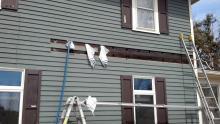
Working from the top down, cellulose insulation is packed in at high density, resulting in a finished R-Value of 12-14, which drastically reduces drafts and leakage. When the work is completed, siding is replaced and sealed.
Foam Board for Sidewalls
In some homes, exterior walls contain only “half-batts” of insulation, or are packed with inferior products like newspaper, back-plaster, or balsam wool (sawdust). These low R-Value obstructions make dense-packing impractical, but there is still hope! In conjunction with a siding contractor, our team will:
Remove the original siding;
Tack a continuous layer of foam board insulation on to the exterior;
Seal seams, edges, window, and door openings;
Install new siding over this insulation layer.
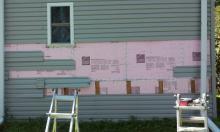
Taking care to make sure sidewalls are properly insulated a sealed improves the comfort and efficiency (and curb appeal!) of your home.
Get in touch with us to set up your sidewall consultation and services!
Contact UsEnergy Assessments for $450 or less
Schedule your FREE Home Estimate
Testimonials
Gina & Neil J., Wilson, WI
Dear St. Croix Energy Solutions - thank you for everything! We love how much warmer our house is now! No more drafts to deal with. The customer service we received was exceptional from the office staff to the installers! Top notch service! We're so glad we learned about your business! Blessings and lots of thanks.